Why your support matters
Research on how to help our foundational trees adapt to climate change is expensive. Grant funding is uncertain in today's political climate. Some of our most important work, like building relationships with ranchers and Indigenous land stewards or maintaining the Blue Oak Living Library sites doesn't fit neatly into a grant cycle.
Private support gives our team the flexibility to move quickly when opportunities arise — for example, to rescue seeds from a threatened population before a drought kills the trees, to maintain monitoring through a funding gap, or to add new samples to our genomics analyses — and to train the next generation of students and postdocs who will carry this work forward.
California's forests and woodlands belong to all of us. If their future matters to you, we'd be grateful for your support. 🌱
Some examples of how funds are used
Transportation, equipment, and labor to collect, process and outplant acorns from at-risk populations before they are lost.
Sequencing and computational analysis to identify which populations carry the adaptive variation needed under future conditions.
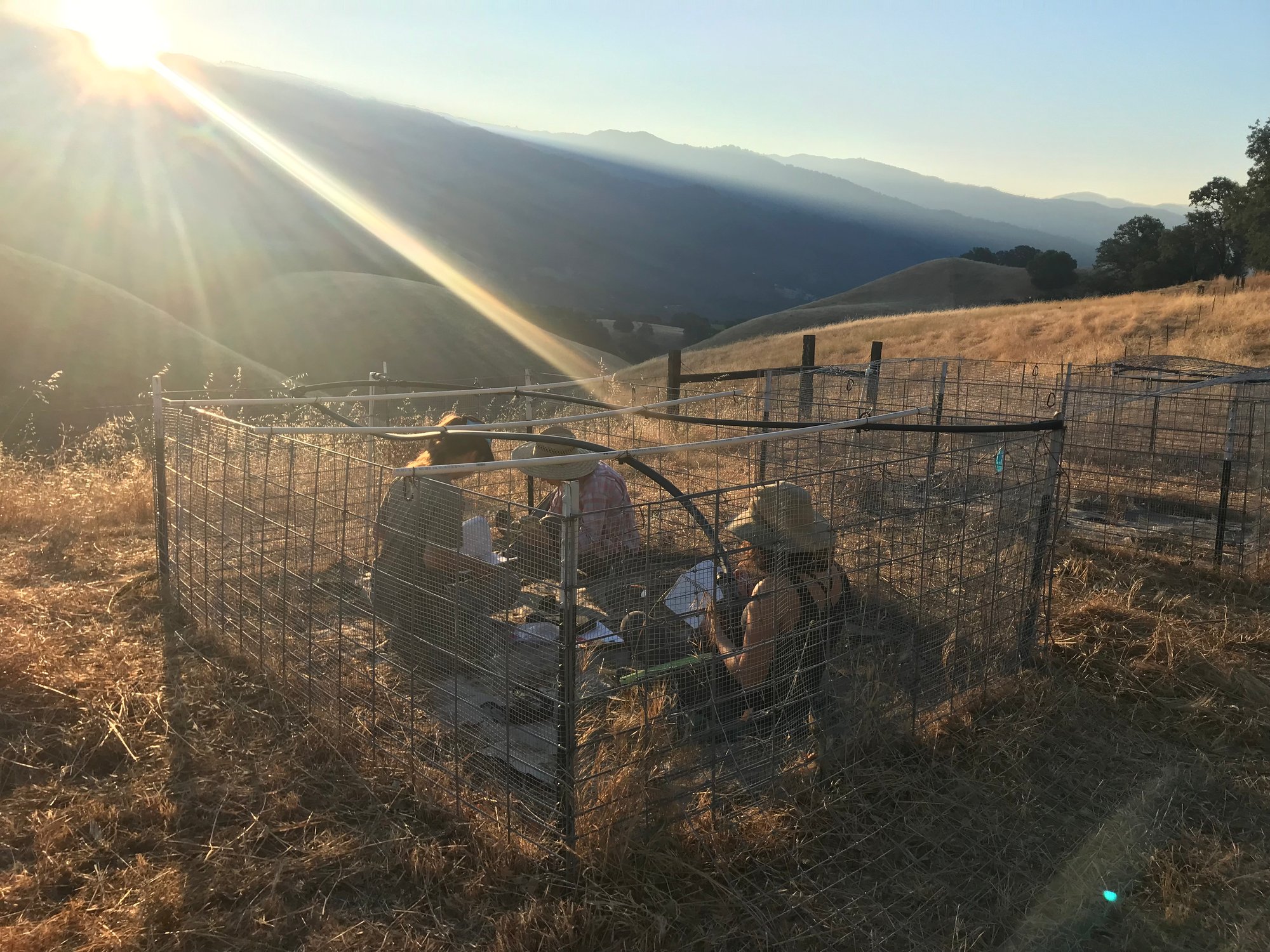
Maintaining field sites and data collection over decades.
Modeling how tree distributions will shift with climate change to identify what and where conservation action will matter most.
Support our work
Contributions are processed through UC Santa Cruz. All gifts go directly to support research and conservation programs.
Gifts to UC Santa Cruz are tax-deductible to the extent permitted by law.
Questions? Get in touch.